

In this week’s episode, guests Aswin Punathambekar and Sriram Mohan discuss their article “A Sound Bridge: Listening for the Political in a Digital Age” which analyzes how catchy sounds become sonic cues for political participation. In their analysis of the popular refrain “Why This Kolaveri” (“Why This Murderous Rage”), the authors demonstrate how a sound’s availability, performativity, and resonance enable it to be picked up by a variety of journalists, politicians, and citizens engaged in popular protest movements. Punathambekar and Mohan argue that understanding politics in the digital age requires attending more closely to sonic modes of participation.
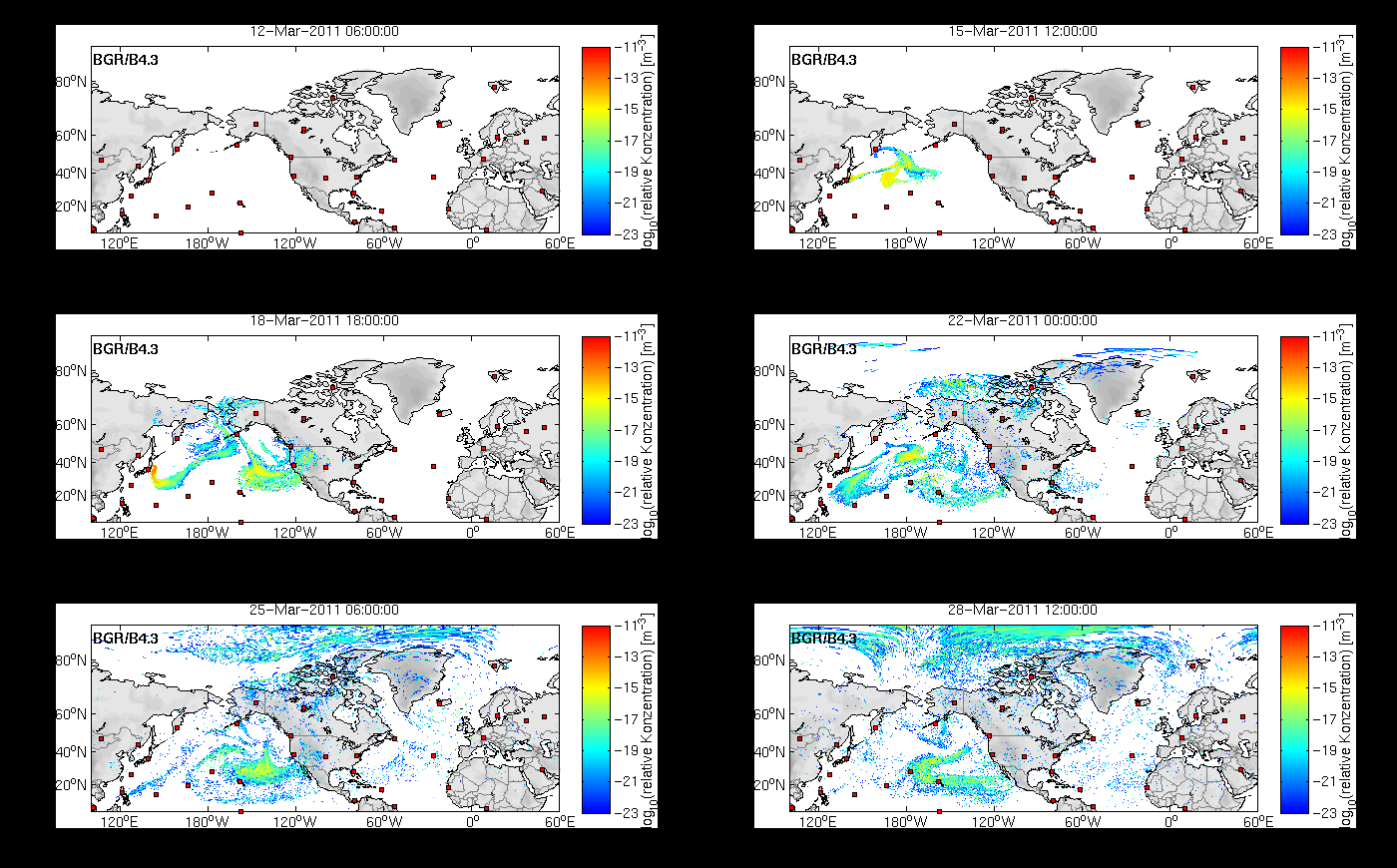
The Weather after Fukushima (with Laura Beltz Imaoka)
In this week’s episode, guest Laura Beltz Imaoka discusses her chapter “Rain with a Chance of Radiation: Forecasting Local and Global Risk after Fukushima,” which traces the news coverage of the fallout of the 2011 Fukushima Daiichi nuclear disaster. Imaoka analyzes how the distinct organizations of the Japanese and U.S. news industries contributed to vastly different public perceptions of local risk and global atmospheric interconnections. She also notes an early moment when, in the absence of reliable data from official institutions, civilians turned to social media to obtain their information, often with disastrous effects.
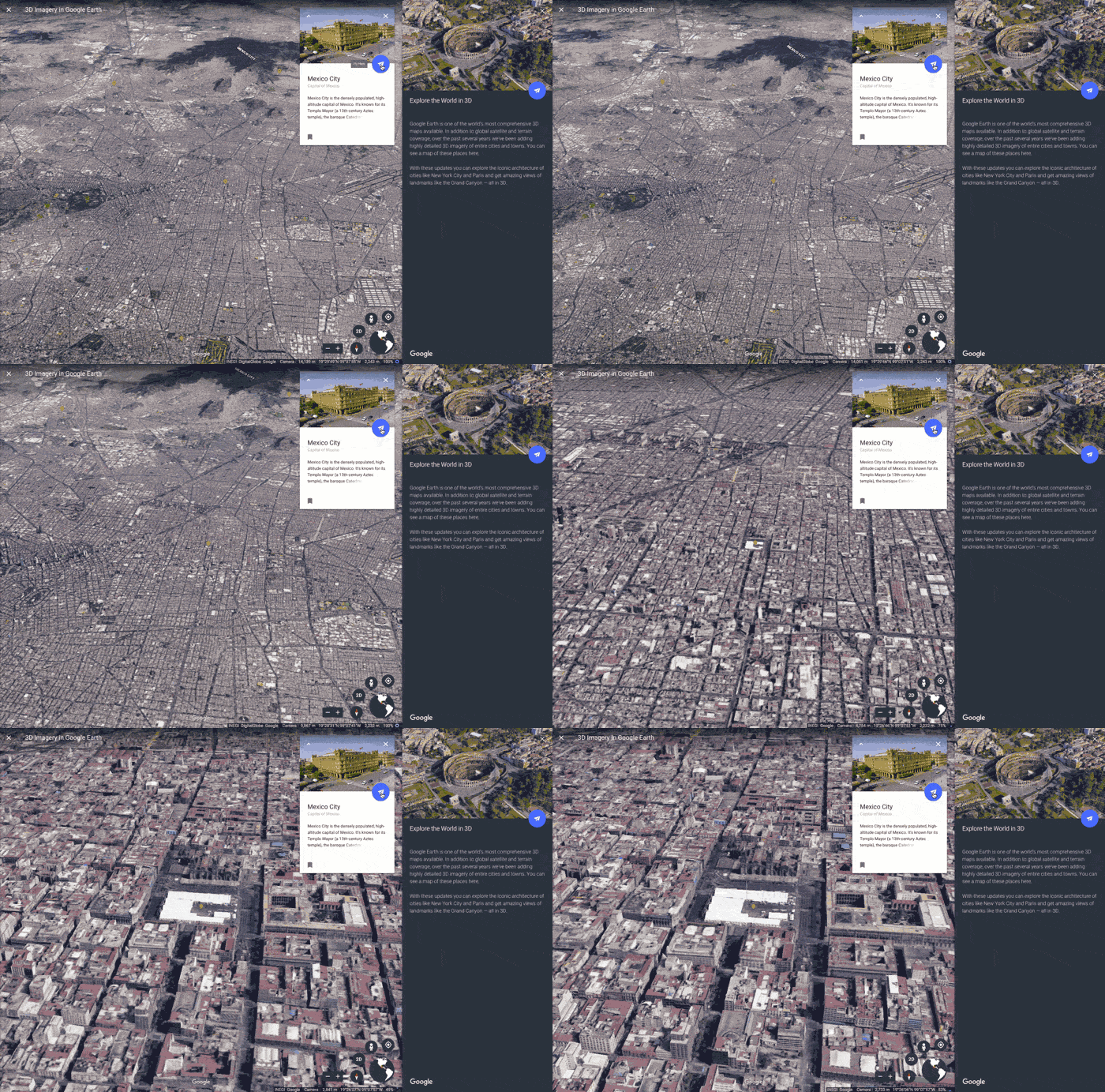
Digital Cartography and the Promise of Interactivity (with Jason Farman)
In this week’s episode, guest Jason Farman discusses his article “Mapping the Digital Empire: Google Earth and the Process of Postmodern Cartography” which analyzes how the political and social implications of cartography take on new significance in the digital age, with the proliferation of interactive maps and geographic information systems (GIS). Farman argues that, by incorporating a social network that engages users as embodied interactors rather than disembodied voyeurs, Google Earth is able to present user-generated content spatially within the very object that such content critiques.
 Global Media Cultures Podcast